Built-In Oscillators
The SMT/Divergence Suite includes 13 built-in oscillators for divergence detection. Each oscillator processes price and volume data differently, providing distinct perspectives on momentum divergence. Select your oscillator from the Divergence Indicator dropdown in the SMT/Divergence Settings group — the SMT/Divergence Suite applies the selected oscillator to all divergence detection logic automatically.
Oscillator Reference
Momentum-Based Oscillators
These oscillators measure the rate and direction of price change. They work on any instrument regardless of volume data availability.
RSI (Relative Strength Index)
The most widely used oscillator for divergence detection. RSI measures the magnitude of recent price changes to identify overbought and oversold conditions. The SMT/Divergence Suite supports configurable length, smoothing type, and overbought/oversold thresholds for RSI.
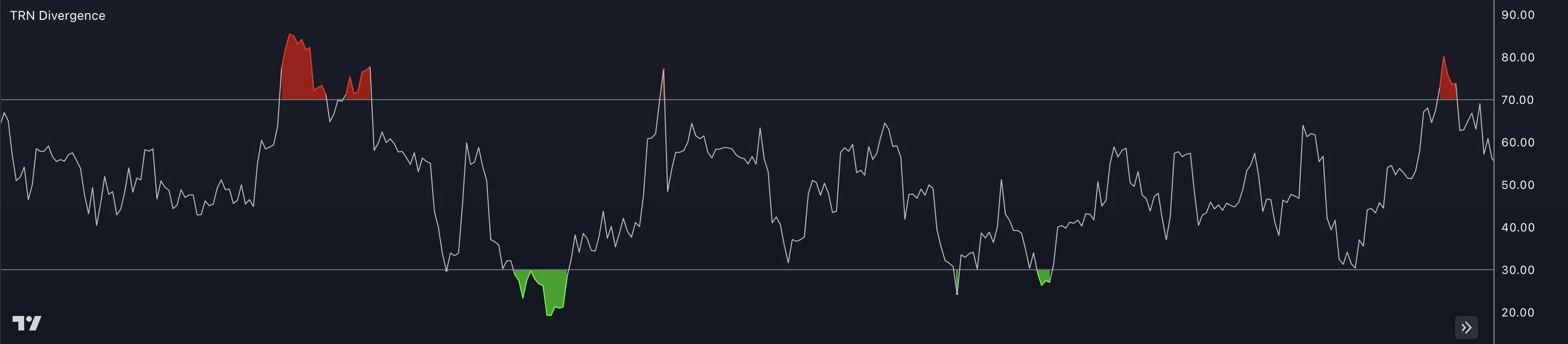
Key Parameters: Length (default: 10), Smoothing Type, Smoothing Length, OB Limit (70), OS Limit (30)
MACD (Moving Average Convergence Divergence)
MACD detects changes in momentum by comparing two moving averages. The SMT/Divergence Suite displays MACD as a histogram with signal line crossover markers, making divergence patterns visually distinct.
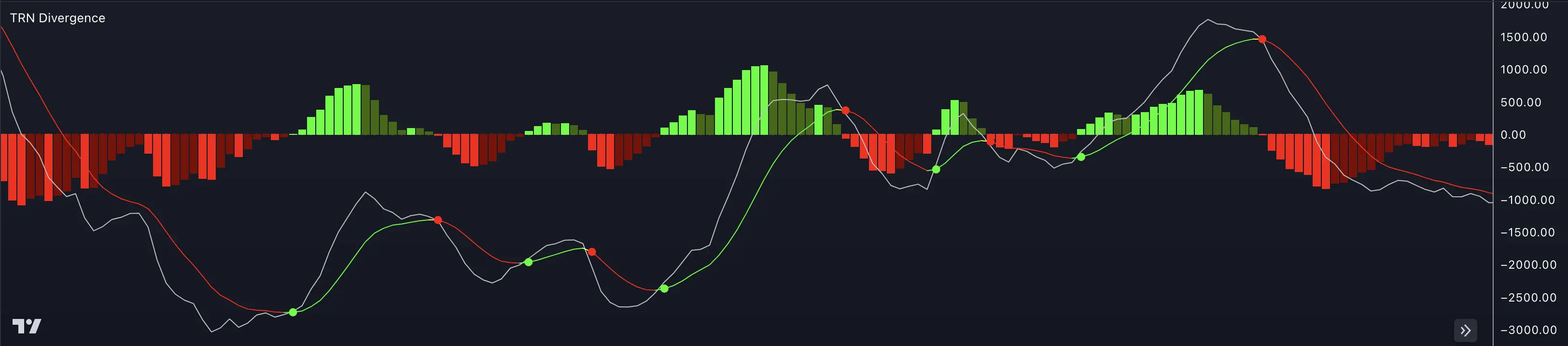
Key Parameters: Fast Length (12), Slow Length (26), Signal Length (9)
Stochastic (%K and %D)
The SMT/Divergence Suite offers both Stochastic %K and %D as separate oscillator choices. %K responds faster to price changes and catches divergences earlier. %D provides a smoother signal with fewer false divergences.
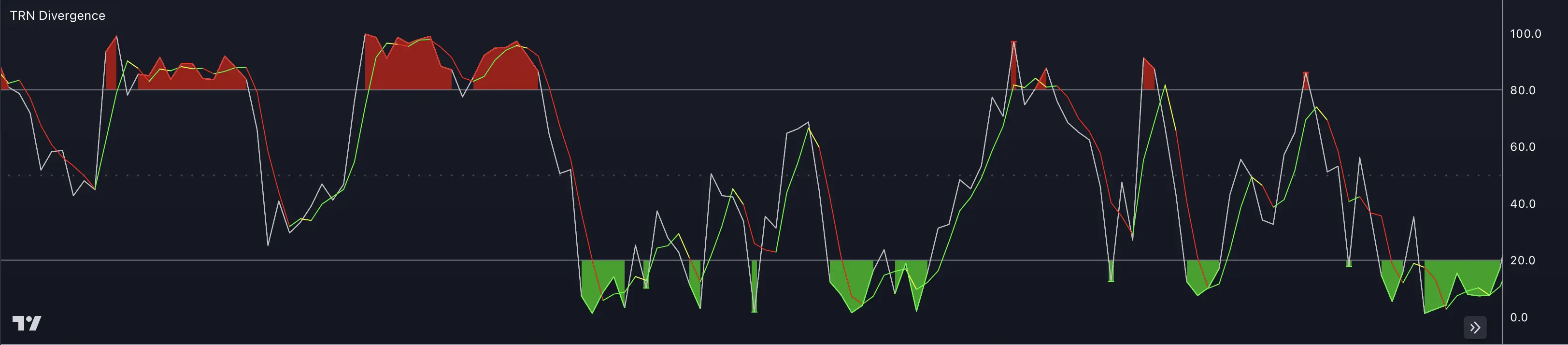
Key Parameters: %K Length (14), %K Smoothing (1), %D Length (3), High Limit (80), Low Limit (20)
CCI (Commodity Channel Index)
CCI measures how far price has moved from its statistical average. The SMT/Divergence Suite applies CCI-specific value condition filters — restricting divergence detection to overbought, oversold, or between-threshold zones.
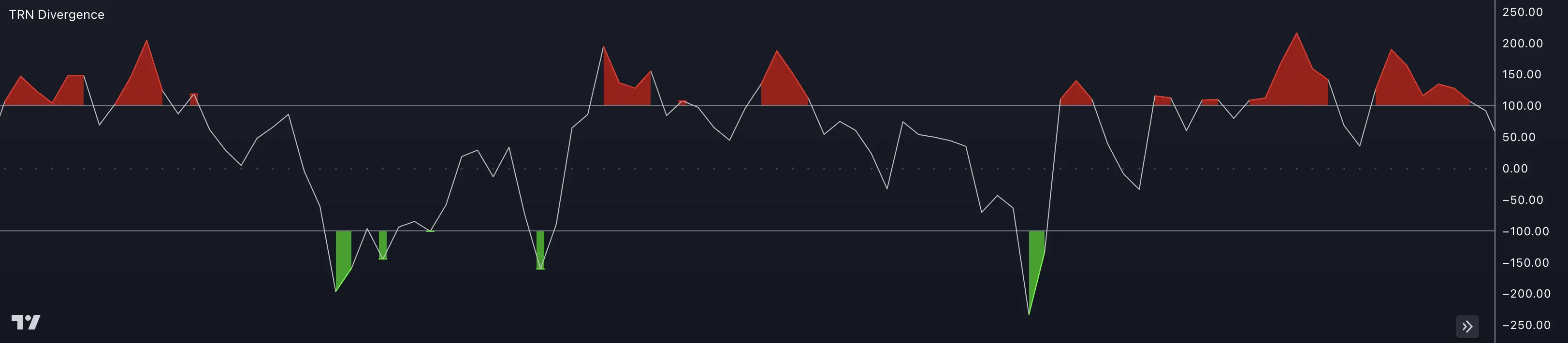
Key Parameters: Length (10), OB Limit (100), OS Limit (-100), Value Condition, Point Matching
Williams %R
Williams %R is an inverted momentum oscillator that ranges from 0 to -100. The SMT/Divergence Suite uses it identically to other bounded oscillators but with inverted threshold logic.
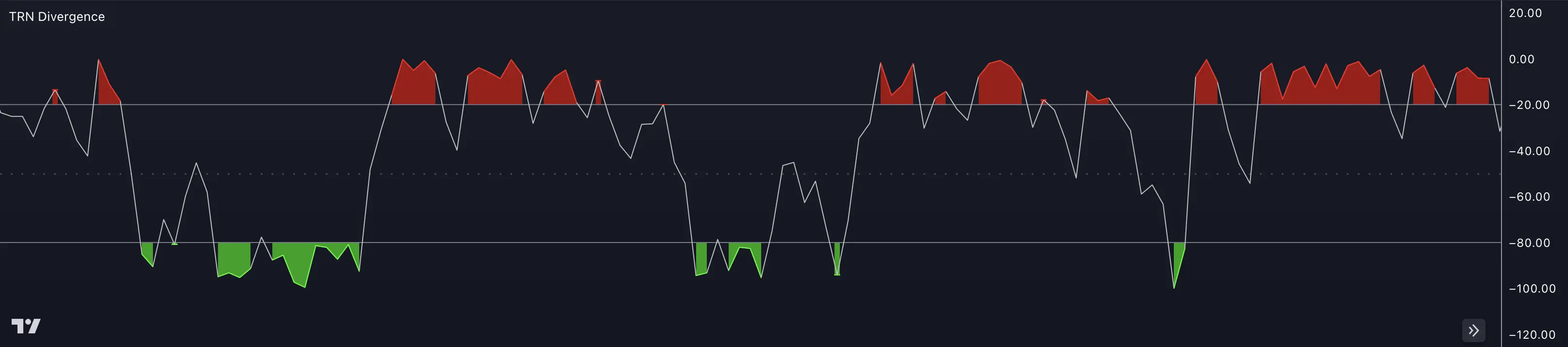
Key Parameters: Length (14), High Limit (-20), Middle Limit (-50), Low Limit (-80)
Awesome Oscillator (AO)
AO measures market momentum as the difference between a short and long simple moving average of the median price. The SMT/Divergence Suite displays AO as a color-coded histogram — green bars for rising momentum, red for falling.
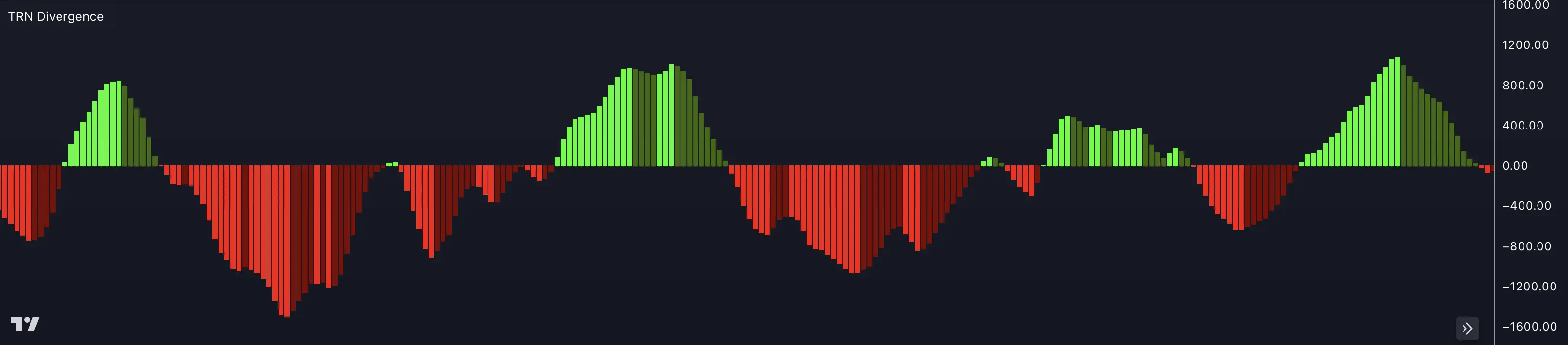
Momentum
A simple rate-of-change oscillator that measures price difference over a lookback period. The SMT/Divergence Suite uses Momentum for straightforward divergence detection without bounded thresholds.
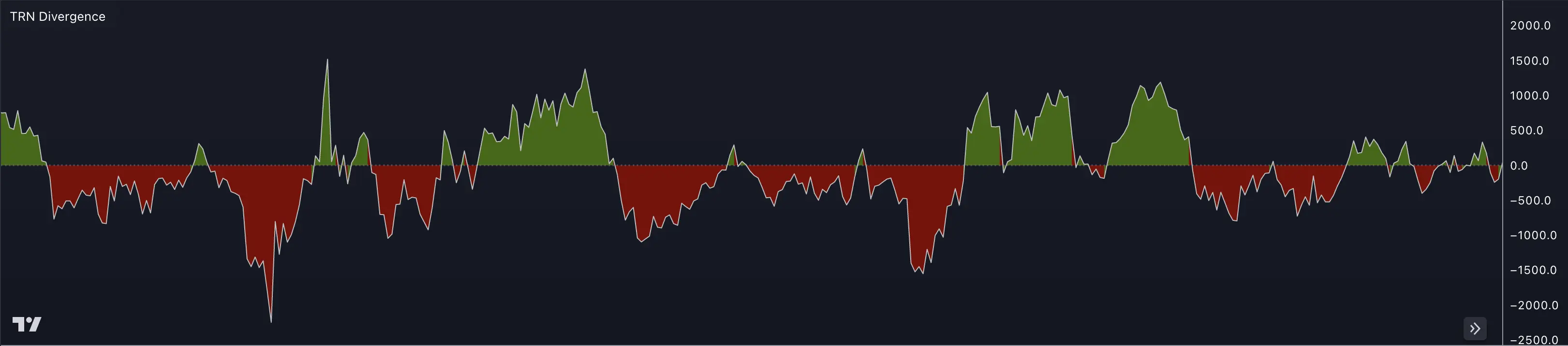
Key Parameters: Length (10)
Volume-Based Oscillators
These oscillators incorporate traded volume data. They require instruments with reliable volume reporting — typically futures, crypto, and stocks. Forex pairs from most brokers lack true volume data.
Cumulative Delta (approx.)
Cumulative Delta approximates the net buying vs. selling volume by analyzing lower-timeframe price-volume relationships. The SMT/Divergence Suite displays CDV as a candle chart in the oscillator pane and applies custom bar coloring to the main chart when CDV is selected.
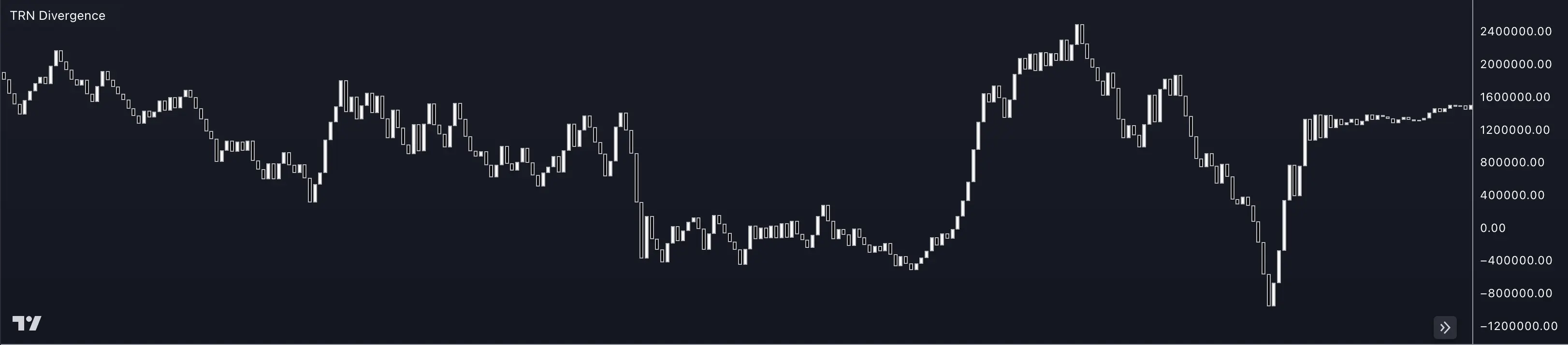
Cumulative Delta divergence is one of the most powerful signals in the SMT/Divergence Suite. When price makes a new low but CDV makes a higher low, institutional buying is absorbing selling pressure — a strong bullish signal. The default oscillator in the Trend and Reversal Scanner is also Cumulative Delta.
OBV (On Balance Volume)
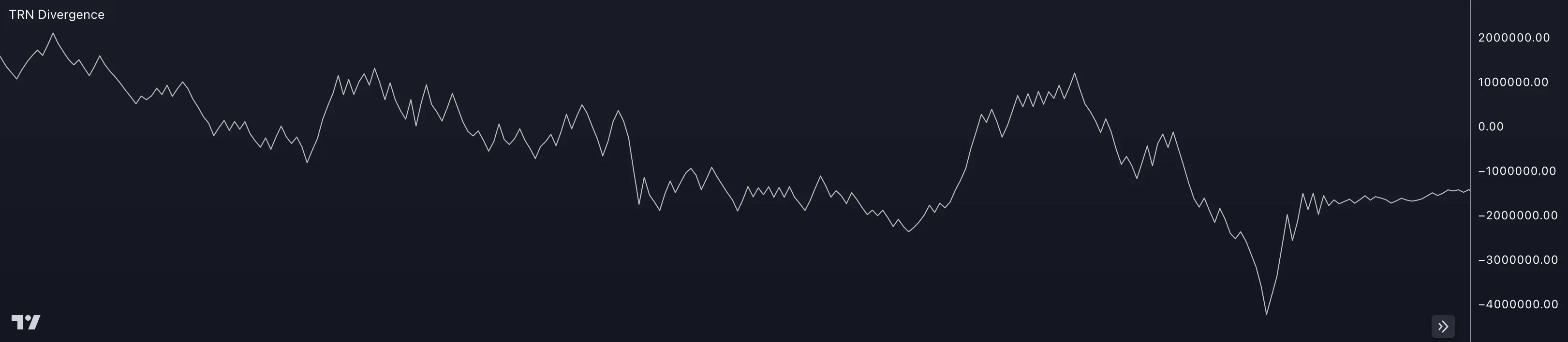
OBV accumulates volume on up-close bars and subtracts it on down-close bars. Divergence between OBV and price reveals whether volume supports or contradicts the current trend.
CMF (Chaikin Money Flow)
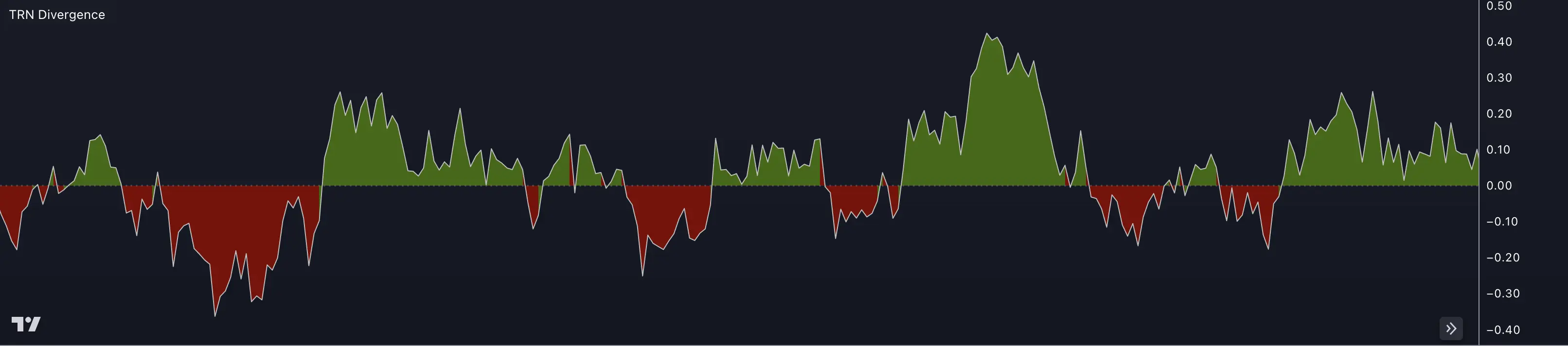
CMF measures the accumulation/distribution of money flow over a period. Positive CMF indicates buying pressure; negative indicates selling. The SMT/Divergence Suite displays CMF with a zero-line fill for quick visual assessment.
Key Parameters: Length (10)
MFI (Money Flow Index)
MFI combines price and volume into a bounded oscillator (0–100), often called the "volume-weighted RSI." The SMT/Divergence Suite applies configurable overbought, middle, and oversold thresholds.
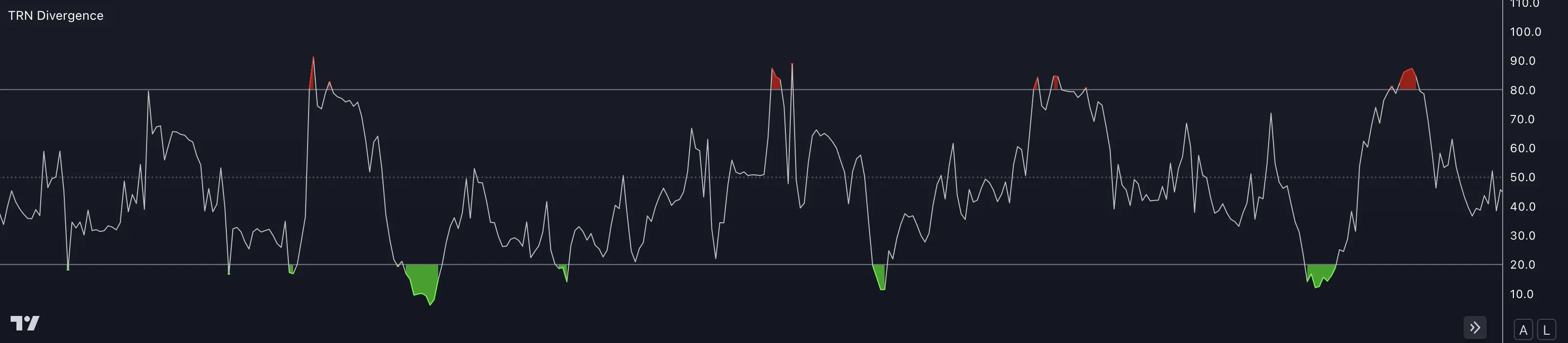
Key Parameters: Length (10), High Limit (80), Middle Limit (50), Low Limit (20)
Oscillator Visualization
The SMT/Divergence Suite uses directional coloring for all oscillators:
| Color | Condition |
|---|---|
| Strong Up (bright green) | Oscillator rising and above signal/zero line |
| Weak Up (dark green) | Oscillator above signal/zero but falling |
| Strong Down (bright red) | Oscillator falling and below signal/zero line |
| Weak Down (dark red) | Oscillator below signal/zero but rising |
| Neutral (yellow) | Transitional state |
All colors are customizable in the Oscillator Visualization settings group.
FAQ
Which oscillator is best for divergence detection in the SMT/Divergence Suite?
The best oscillator depends on your instruments. Cumulative Delta works well for futures and crypto where reliable volume data exists. RSI is the most versatile choice for forex and stocks. MACD excels at detecting momentum divergences on higher timeframes. The SMT/Divergence Suite lets you switch oscillators instantly without reconfiguring other settings.
Can I change oscillator parameters in the SMT/Divergence Suite?
Yes, every built-in oscillator in the SMT/Divergence Suite has configurable parameters. RSI and CCI support length, smoothing, and overbought/oversold thresholds. MACD offers fast length, slow length, and signal smoothing. Stochastic provides %K length, %K smoothing, and %D length. Access these by enabling "Show Oscillator Settings" in the SMT/Divergence Settings group.
What is the difference between volume-based and momentum-based oscillators in the SMT/Divergence Suite?
The SMT/Divergence Suite includes both types. Volume-based oscillators — Cumulative Delta, OBV, CMF, and MFI — measure buying and selling pressure from traded volume. Momentum-based oscillators — RSI, MACD, Stochastic, CCI, Momentum, Williams %R, and Awesome Oscillator — measure the rate and direction of price change. Volume-based oscillators require instruments with reliable volume data (futures, crypto, stocks).