Harmonic Patterns Detection
TRN's Harmonic Patterns Suite identifies 7 Fibonacci-based harmonic patterns with precision. Our algorithm scans for these complex formations across multiple timeframes, providing real-time alerts and statistical success rates. Each pattern below includes the Fibonacci ratios used for detection and practical trading guidance.
Gartley Pattern
The Gartley pattern is the most widely recognized harmonic pattern, originally described by H.M. Gartley in 1935. It forms an "M" shape (bearish) or "W" shape (bullish) and is defined by a 0.618 retracement at point B and a 0.786 XA retracement at point D.
Key Components
- XA Leg: The initial price move.
- AB Leg: A retracement of the XA leg, typically 61.8%.
- BC Leg: A retracement of the AB leg, typically 38.2% or 88.6%.
- CD Leg: An extension of the BC leg, typically 127.2% or 161.8%.
Trading Implications
The Gartley pattern signals a potential reversal at point D, where the 0.786 XA retracement creates a well-defined Potential Reversal Zone (PRZ). Because the PRZ is relatively tight, Gartley patterns offer favorable risk-to-reward ratios. The indicator automatically calculates entry, stop-loss, and two take-profit levels for each detected Gartley.
Butterfly Pattern
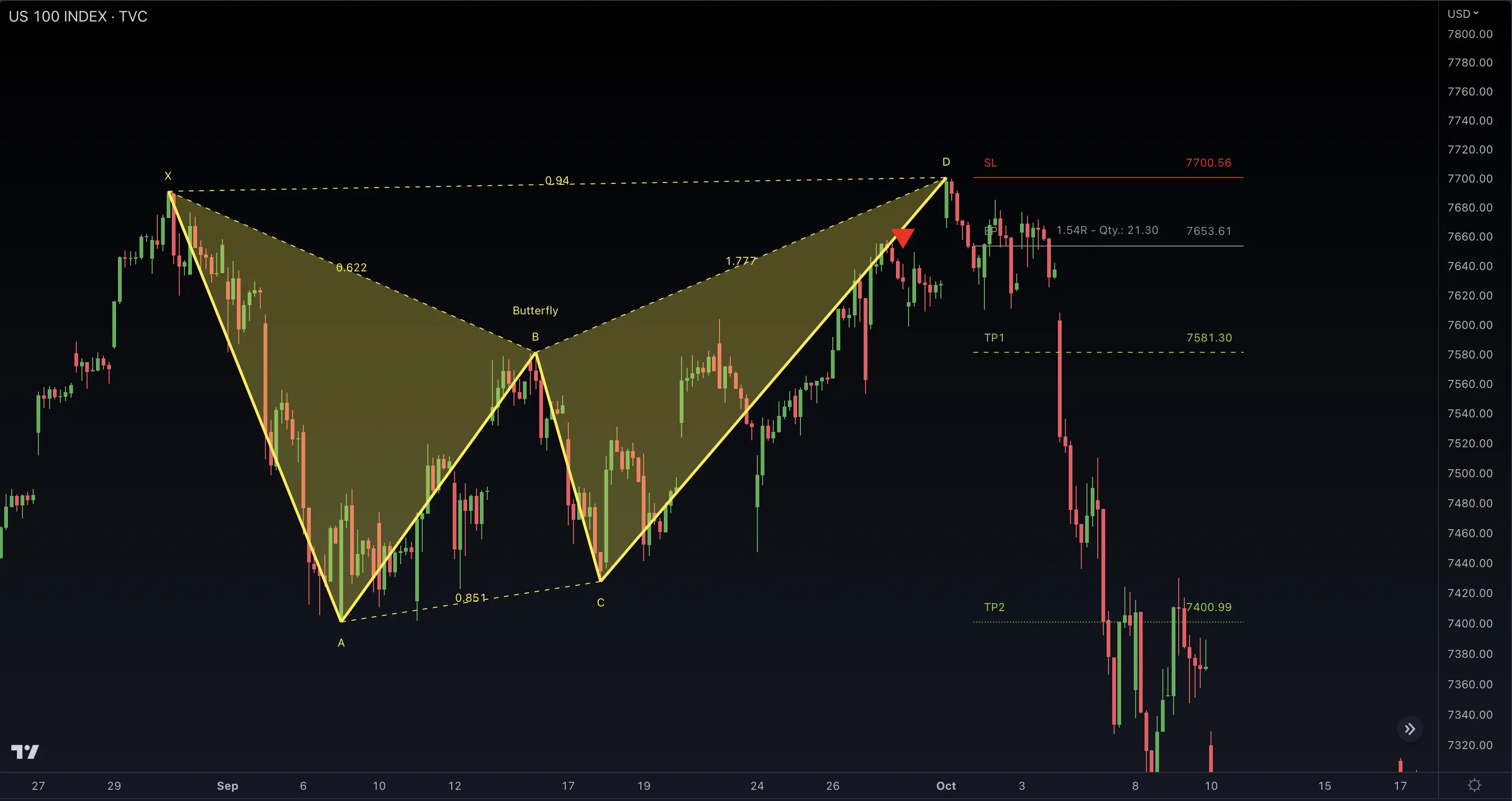
Pattern Formation
The Butterfly pattern is similar to the Gartley but has a more extended CD leg. It also forms an "M" or "W" shape and is identified using specific Fibonacci levels.
Key Components
- XA Leg: The initial price move.
- AB Leg: A retracement of the XA leg, typically 78.6%.
- BC Leg: A retracement of the AB leg, typically 38.2% or 88.6%.
- CD Leg: An extension of the BC leg, typically 161.8% or 224%.
Trading Implications
The Butterfly is an extension pattern — point D extends beyond the starting point X, which means it catches reversals at more extreme price levels. This often results in powerful reversals when the pattern completes. The indicator validates the 1.27 or 1.618 XA extension at point D and calculates the reversal zone automatically.
Bat Pattern
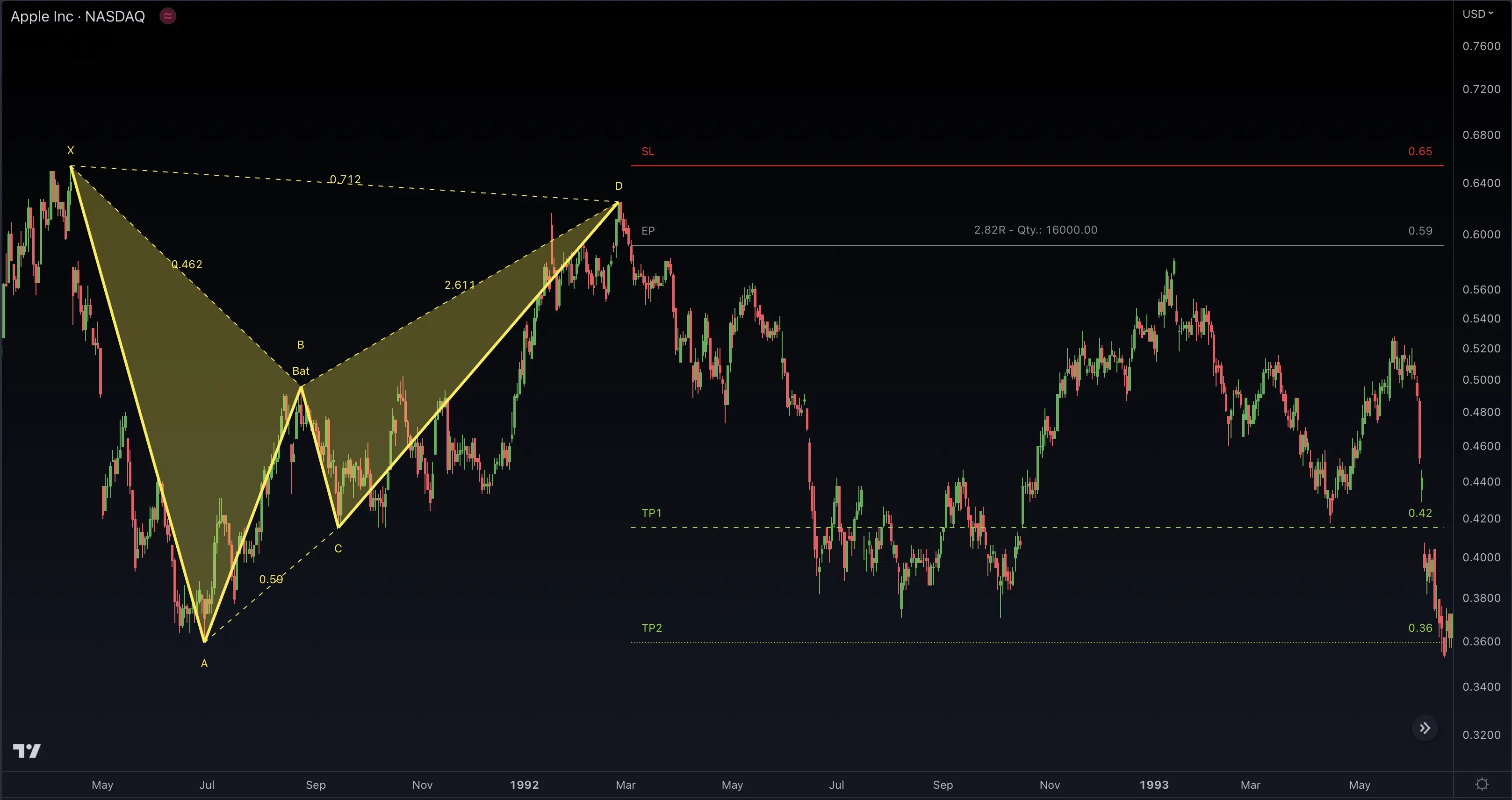
Pattern Formation
The Bat pattern is a variation of the Gartley pattern with a more precise Fibonacci retracement level for the AB leg. It also forms an "M" or "W" shape.
Key Components
- XA Leg: The initial price move.
- AB Leg: A retracement of the XA leg, typically 38.2% or 50%.
- BC Leg: A retracement of the AB leg, typically 38.2% or 88.6%.
- CD Leg: An extension of the BC leg, typically 161.8% or 261.8%.
Trading Implications
The Bat pattern is known for its tight Potential Reversal Zone at the 0.886 XA retracement, making it one of the most precise harmonic patterns. The narrow PRZ allows for tight stop-loss placement and strong risk-to-reward ratios.
5-0 Pattern
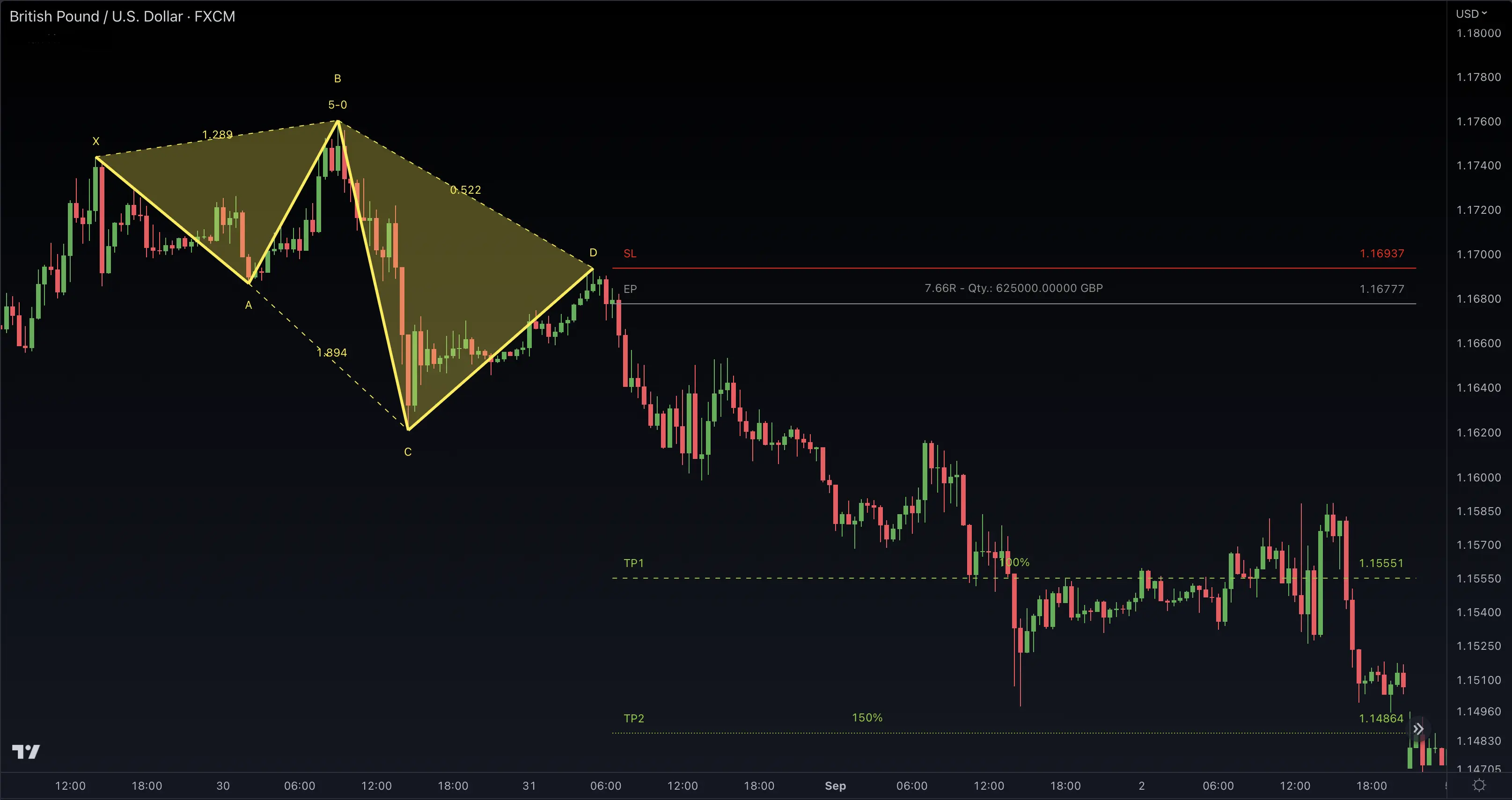
Pattern Formation
The 5-0 pattern is a newer harmonic pattern that consists of five price swings. It is identified using specific Fibonacci retracement and extension levels.
Key Components
- XA Leg: The initial price move.
- AB Leg: A retracement of the XA leg, typically 113% or 161.8%.
- BC Leg: A retracement of the AB leg, typically 161.8% or 224%.
- CD Leg: An extension of the BC leg, typically 161.8% or 261.8%.
- DE Leg: An extension of the CD leg, typically 127.2% or 161.8%.
Trading Implications
The 5-0 pattern differs from other harmonics because it uses a reciprocal AB=CD structure and has five price swings instead of four. It is often an early indicator of trend reversal, providing entries before the new trend fully develops.
Crab Pattern
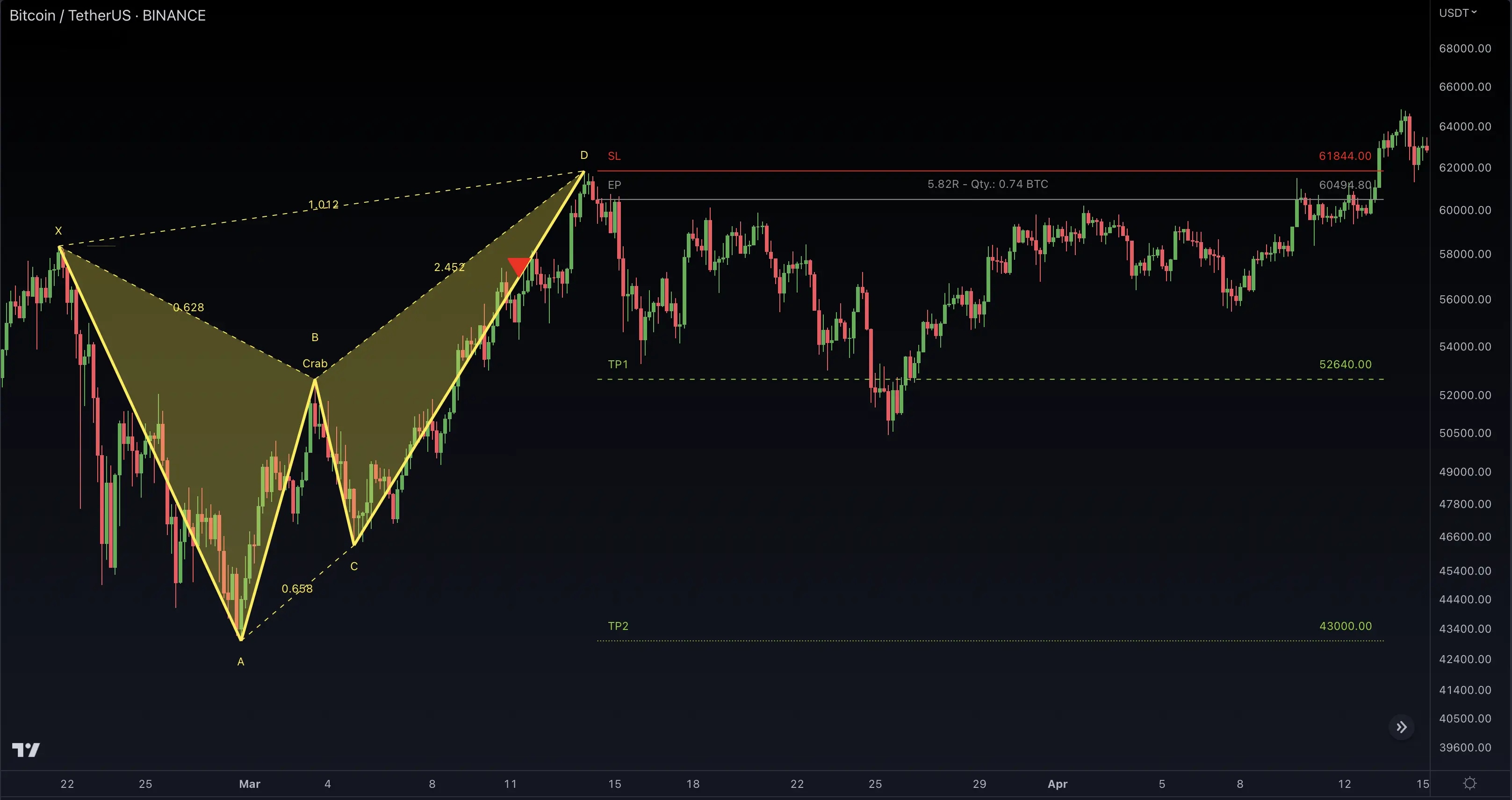
Pattern Formation
The Crab pattern is known for its extreme precision and is identified using specific Fibonacci retracement and extension levels. It consists of four price swings.
Key Components
- XA Leg: The initial price move.
- AB Leg: A retracement of the XA leg, typically 38.2% or 61.8%.
- BC Leg: A retracement of the AB leg, typically 38.2% or 88.6%.
- CD Leg: An extension of the BC leg, typically 261.8% or 361.8%.
Trading Implications
The Crab pattern extends to the 1.618 XA projection at point D, making it one of the most extreme harmonic patterns. It is considered the most precise of all harmonic patterns when the Fibonacci ratios align correctly, and often marks major turning points in price.
Cypher Pattern
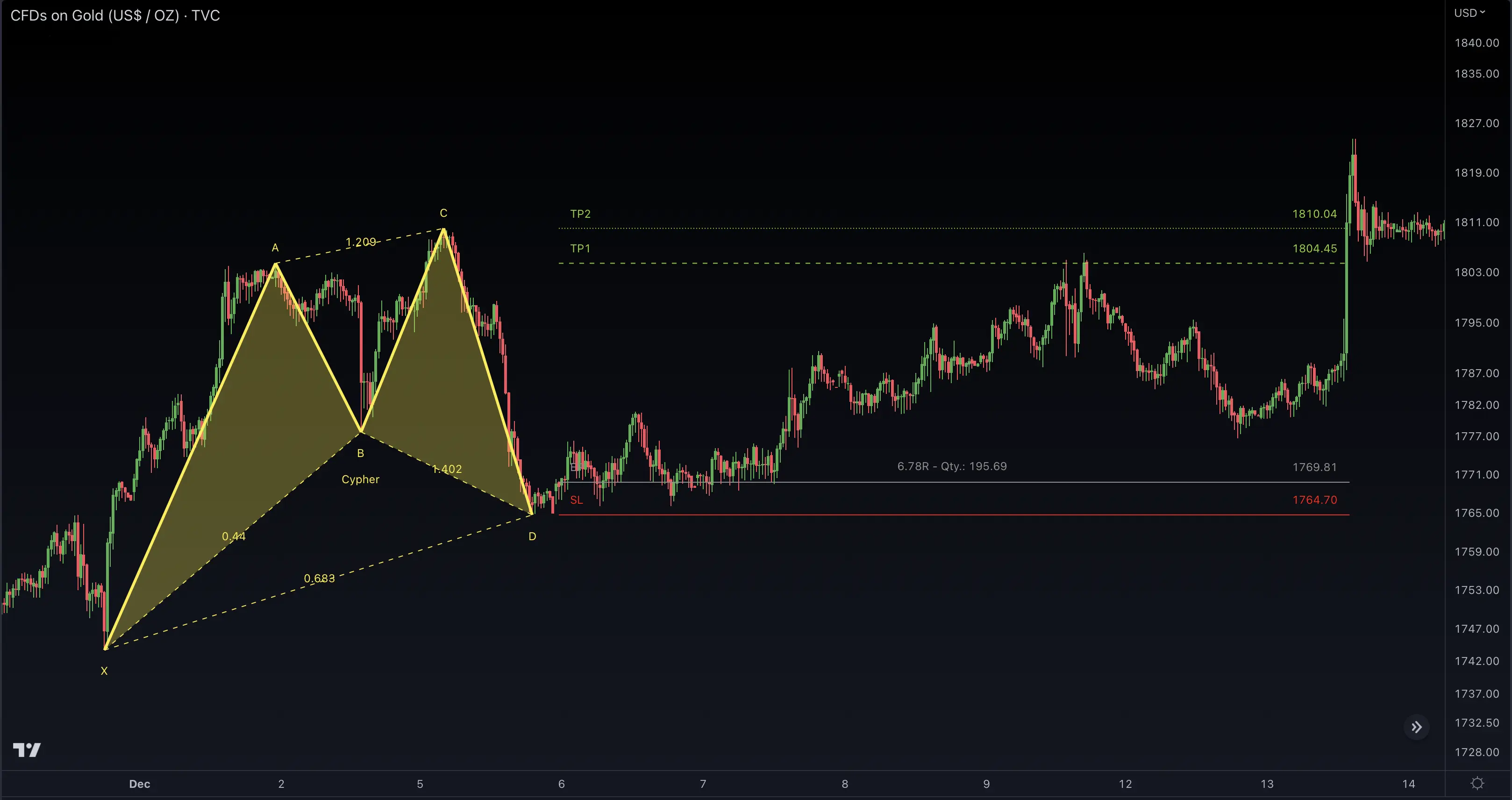
Pattern Formation
The Cypher pattern is a newer harmonic pattern that consists of four price swings. It is identified using specific Fibonacci retracement and extension levels.
Key Components
- XA Leg: The initial price move.
- AB Leg: A retracement of the XA leg, typically 38.2% or 61.8%.
- BC Leg: A retracement of the AB leg, typically 113% or 141.4%.
- CD Leg: An extension of the BC leg, typically 78.6% or 127.2%.
Trading Implications
The Cypher pattern uses a 0.786 XC retracement at point D, which differs from the XA-based measurements used by most other harmonic patterns. This gives it a unique price structure that often catches moves other patterns miss.
Shark Pattern
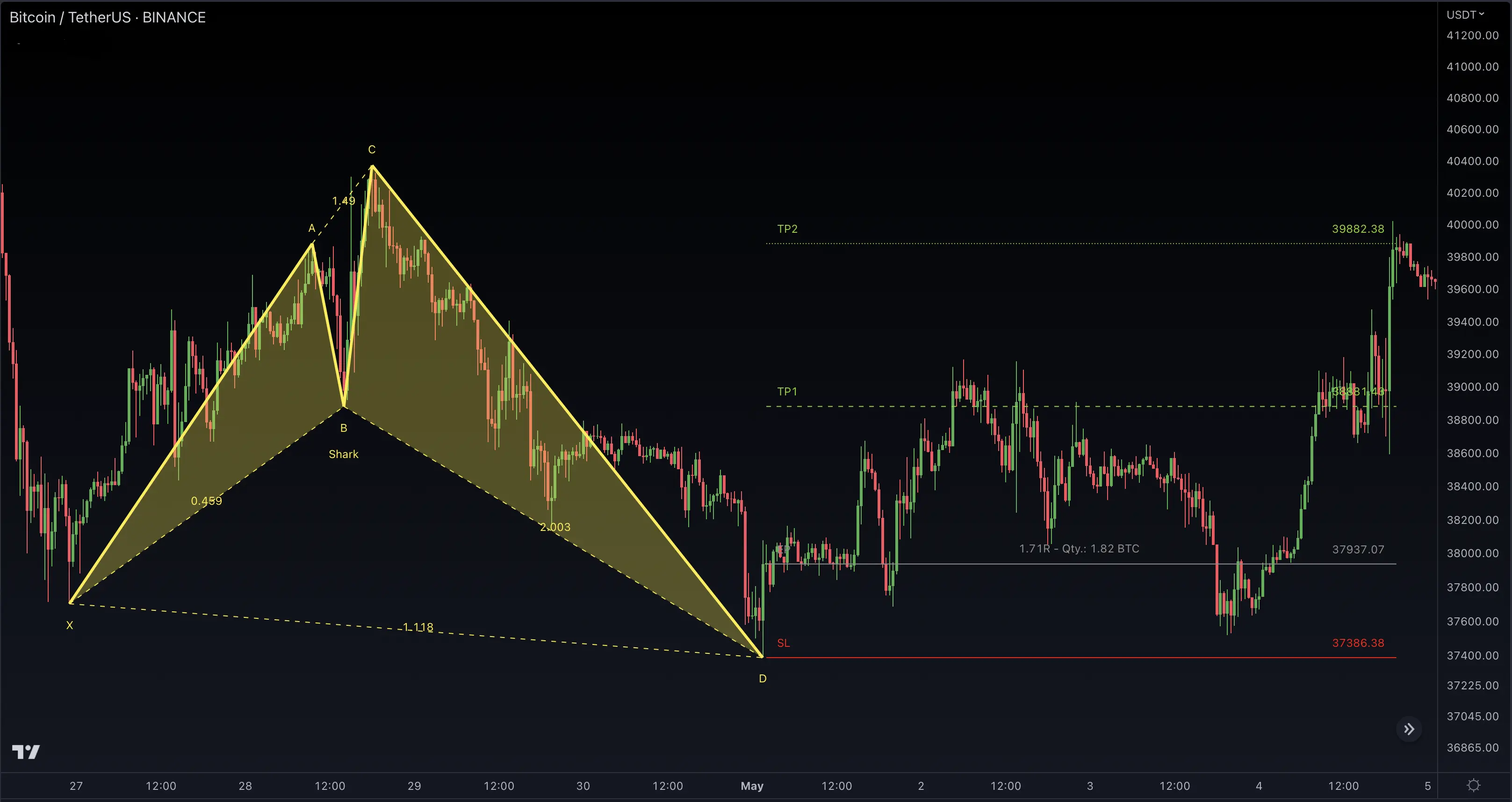
Pattern Formation
The Shark pattern is a newer harmonic pattern that consists of four price swings. It is identified using specific Fibonacci retracement and extension levels.
Key Components
- XA Leg: The initial price move.
- AB Leg: A retracement of the XA leg, typically 113% or 161.8%.
- BC Leg: A retracement of the AB leg, typically 161.8% or 224%.
- CD Leg: An extension of the BC leg, typically 161.8% or 261.8%.
Trading Implications
The Shark is an aggressive harmonic pattern that uses 0.886 and 1.13 Fibonacci ratios. It tends to appear in volatile market conditions and can signal sharp reversals. Because of its aggressive nature, proper risk management is particularly important with Shark patterns.
FAQ
Which harmonic pattern is most reliable?
The Gartley and Bat patterns are generally considered the most reliable harmonic patterns due to their well-defined Fibonacci ratios and moderate extension levels. The Harmonic Patterns Suite tracks per-pattern statistics so traders can validate which patterns perform best on their specific instrument and timeframe.
How does the Harmonic Patterns Suite confirm breakout signals?
The Harmonic Patterns Suite offers 7 breakout confirmation methods — from simple close-based conditions to TRN Bars Signals integration. Each method represents a different tradeoff between entry speed and confirmation quality. See the breakout conditions page for details on all 7 methods.
Why are Fibonacci ratios important in harmonic patterns?
Fibonacci ratios define the precise geometric relationships between the XABCD swing legs that identify each harmonic pattern. The Harmonic Patterns Suite validates each pattern's leg ratios against configurable accuracy constraints to ensure detection quality.
How many patterns does the Harmonic Patterns Suite detect?
The Harmonic Patterns Suite detects 7 harmonic patterns — Gartley, Bat, Butterfly, Crab, Cypher, Shark, and 5-0. Each pattern can be independently set to Off, Long Only, Short Only, or Long & Short, giving traders full control over which patterns are active.